oiled toad

Latest News

Latest News

Deadly Marburg Virus Found in Sierra Leone Bats

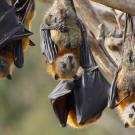
Scientists have discovered Marburg virus in fruit bats in Sierra Leone. This is the first time the deadly virus has been found in West Africa. Five Egyptian rousette fruit bats tested positive for active Marburg virus infection. Scientists caught the bats separately in three health districts: Moyamba, Koinadugu and Kono.

Coconut the Snow Leopard Recovers From Eyelid Surgery

Coconut, the snow leopard cub born at the Sacramento Zoo earlier this year, underwent a rare eyelid surgery on Wednesday, October 24. UC Davis veterinary specialists and the Sacramento Zoo veterinary team collaborated to correct a congenital eyelid defect known as coloboma. This ocular deformity is sometimes documented in snow leopards under human care. Coconut was also born with other birth defects that impact his mobility.

Read more

Focus on Solutions for Global Climate Action

As California gears up for the Global Climate Action Summit held in San Francisco this week, the University of California, Davis, participates in several solutions-based efforts to help sound science inform global climate actions.

UC Davis at the summit

UC Davis has organized five official affiliate events of the summit, one on campus in Davis and four in San Francisco.

Suspected Exposure to Filoviruses Among People Contacting Wildlife in Southwestern Uganda

People in the Bwindi region of southwestern Uganda have suspected exposure to filoviruses, particularly those in contact with wildlife, according to a new study led by researchers at the UC Davis One Health Institute and the Bwindi Community Hospital in Uganda. The study, published June 18 inThe Journal of Infectious Diseases, is the first report of human exposure to ebolaviruses in the region.

Training the Next Generation of One Health Professionals

The next generation of One Health professionals faces a world of interconnected challenges. Global disease outbreaks like Ebola and Zika viruses, antimicrobial resistance, food insecurity, pollution and biosecurity are related to changes in land use, the climate, economy, industry and society.

Bats are the Major Reservoir of Coronaviruses Worldwide

Results of a five-year study in 20 countries on three continents have found that bats harbor a large diversity of coronaviruses (CoV), the family of viruses that cause Severe Acute Respiratory Syndrome Coronavirus (SARS) and Middle East Respiratory Syndrome Coronavirus (MERS).

Paving the Way for Pathogens

Coastal waters near heavy human development are more likely to receive land-based “pathogen pollution,” which can include viruses, bacteria and parasites, according to a recent study from the University of California, Davis. The study said higher levels of rainfall and development increase the risk of disease-causing organisms flowing to the ocean.

Chewed Plants Help Detect Viruses in Wild Mountain Gorillas and Monkeys

Chewed bark, leaves and fruit discarded by mountain gorillas provide a simple way to test the endangered apes for viruses without disturbing them, according to scientists from the University of California, Davis, studying mountain gorillas and golden monkeys in East-Central Africa.

The method is described in a study published recently in the American Journal of Primatology. The study is led by UC Davis’ One Health Institute and Gorilla Doctors, a program led by the nonprofit Mountain Gorilla Veterinary Project and UC Davis.